
International Indian Treaty Council

     CONSEJO INTERNACIONAL DE TRATADOS INDIOS

“WORKING FOR THE RIGHTS AND RECOGNITION OF INDIGENOUS PEOPLES"
   
Home About Us Contact Web Content Search


Home
Urgent / Urgente
IITC E-News
UN Declaration
Upcoming Events
IITC Training
OAS Declaration
Environment
Treaties / Tratados
The Right to Food
Prisoners
Permanent Forum
Racism
Treaty Conferences
Treaty Council News
Human Rights
International Decade
Global Trade
Cultural Rights
Youth Program
Women & Children
Health / Toxics
Affiliate Input
IITC Annual Reports
Contact information
Links
Make a Contribution
IITC Photos


  DECLARACION DE LA JUVENTUD DE LOS PUEBLOS  INDIGENAS
SOLICITAMOS A LOS ESTADOS DAR ESPECIAL ATENCION DE LA DISCRIMINACION A LOS NINOS, NINAS Y JOVENES DE LOS PUEBLOS INDÍGENAS (Durban-Sud Africa, Agosto-Septiembre, 2001)

DECLARATION OF INDIGENOUS PEOPLES YOUTH
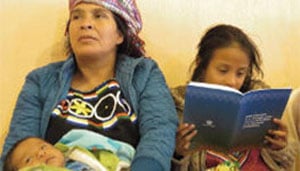
WE REQUEST THAT STATES GIVE SPECIAL ATTENTION TO THE DISCRIMINATION OF INDIGENOUS CHILDREN AND YOUTH..


Nosotros los jóvenes de los Pueblos Indígenas participantes de la Cumbre Mundial de la Juventud, Foro Mundial de ONG, de la Conferencia Mundial contra el Racismo, la Discriminación Racial, la Xenofobia y todas las formas de intolerancia, reunidos en Durban, Sudáfrica del 26 de agosto al 07 de septiembre de 2001, adoptamos las propuestas contenidas en la presente declaración siendo las reflexiones y el aporte de los participantes, y a través de los cuales exigimos el fin del racismo contra los Pueblos Indígenas particularmente a los niños, niñas y jóvenes y el reconocimiento pleno de nuestros derechos.

We, the Indigenous youth participants of the Youth Summit, NGO Forum of the World Conference Against Racism, Xenophobia, Racial Discrimination and related intolerance, having met in Durban, South Africa from August 26 to September 7, 2001,  adopt the following proposals contained in this  declaration which constitute the thoughts and contributions of the participants, and demand the end to racism towards the Indigenous Peoples particularly towards children and youth  as well as the complete recognition of our rights.

CONSIDERANDO:

Considering:

1.  La falta de reconocimiento de los Pueblos Indígenas como Pueblos es una forma de discriminación racial que nos afecta profundamente a los niños, niñas y jóvenes indígenas.

1. The lack of recognition of Indigenous Peoples as Peoples is a form of racial discrimination that deeply affects Indigenous children and youth.

2.  Es una realidad que la ONU, los Estados, Ongs y los espacios de concertación de la sociedad civil dan poca participación a la juventud. De igual forma las Conferencias u Encuentros Internacionales dan poca y en muchas ocasiones ninguna participación a la juventud indígena.

2. It is a reality that States, NGOs, UN and other spaces in civil society for concentration offer little participation for Indigenous youth.  In the same way, Conferences and International Events allow for little to no participation to Indigenous Youth.

3. Es una realidad que los niños, niñas y jóvenes indígenas son reclutados forzosamente por las fuerzas armadas y grupos paramilitares estos conflictos armados les causan graves amenazas a su integridad física y mental. La vulnerabilidad de los niños, niñas y jóvenes  indígenas en esas circunstancias se agrava además por el efecto del gran número de pueblos indígenas desplazados de las zonas de conflicto armado.

3.  It is a reality that Indigenous children and youth are forcibly recruited for the armed forces and paramilitary groups and as a result of armed conflict Indigenous children and youth suffer grave threats to their physical and mental well being.  The vulnerability of Indigenous children, youth and young people in these circumstances are further aggravated by the great number of Indigenous Peoples displaced from armed conflict zones.

4.  Los niños, niñas y jóvenes indígenas sufren a menudo múltiples formas de discriminación por razón de carácter indígena, edad, género, idioma, nivel económico, casta,  orientación sexual y otras.

4.  Indigenous children, youth and young people frequently suffer multiple forms of discrimination based on indigenous character, age, gender, language, economic status, caste, sexual orientation and others.

5. Los niños, niñas y jóvenes indígenas son discriminados y marginados  en el acceso e implementación  del sistema de salud,  justicia de menores, educación, empleo y participación política.

5.  Indigenous children and youth are discriminated against in the access and delivery of health, justice, housing, education and employment and political participation.

6. La discriminación contra los niños, niñas y jóvenes indígenas en lo que concierne al empleo esta reflejada en las elevadas tasas de desempleo; la migración de sus comunidades y la explotación como  mano de obra barata, el tráfico de niños y niñas y el turismo sexual.

6. Discrimination against indigenous children and youth in terms of employment are reflected in the high unemployment rates, migration from their communities and exploitation as cheap labor, trade of children and sex tourism.

7. La discriminación contra los niños, niñas y jóvenes indígenas por parte de la policía y los sistemas jurídicos se manifiesta en las políticas, leyes y prácticas parciales de señalar y/o criminalizarlos; las elevadas tasas de encarcelamiento y por las muertes ocurridas durante su al aprehensión, detención o en la cárcel.

7. Discrimination against indigenous children and youth in law enforcement and the legal systems is manifested through policies, laws, and practices such as racial profiling, their high representation in jails and for the deaths during apprehention, detention and encarceration.

8.  La exclusión, la marginación, la discriminación racial, la colonización, la migración, la xenofobia y el desplazamiento forzado de niños, niñas y jóvenes indígenas crean un ambiente problemático que conduce al abuso de alcohol, drogas y otras sustancias dañinas; la depresión y el suicidio.

8. Exclusion, marginalisation, racial discrimination, colonization, immigration, xenophobia, and forced removal of indigenous children and youth from communities and families create an environment that leads to alcohol, drug and substance abuse; depression and suicide.

9. La Globalización, en Pueblos Indígenas forza cambios de modos de auto desarrollo independiente a economías de mercado las cuales aumentan la mortalidad infantil y la mal-nutrición de niños, niñas y jóvenes indígenas en medida desproporcionada.  

9. Globalization forces changes in Indigenous Peoples modes of independent development to market economies which disproportionatly increase infant mortality rates and malnutrition among indigenous children and youth compared to developed nations.

10. Existe un acceso limitado a la educación en todos sus niveles, la imposición de programas de estudio culturalmente adaptados a la formación de los niños, niñas y jóvenes indígenas, unida a un proceso de discriminación ha producido un quebrantamiento de las relaciones intergeneracionales causando pérdida de los idiomas y de la identidad cultural y alejamiento de su cultura, familia, tribus y comunidades.. Esta situación produce una auto-discriminación.

10. There exists a limited access to education at all levels, the imposition of study programs culturally adopted to the formation of indigenous children and youth that, coupled with a process of discrimination, has produced unstable inter-generational relationships and the consequent loss of language and cultural identity.  This situation creates repercussions that detach indigenous children and youth from their culture and often from their families and tribes producing a form of self-discrimination.

11. La globalización económica y el sistema neoliberal contemporáneo vienen a reactualizar y agudizar la discriminación sistemática e institucionalizada contra los niños, niñas y jóvenes en sus respectivos pueblos indígenas;  perpetuando la pobreza, el despojo de tierras, la marginación, la exclusión, la colonización, la migración y la xenofóbia.

11. Economic globalization and contemporary neoliberal systems reactivate and aggrivate  systematic and institutionalized racial discrimination against indigenous children and youth in their respective communities thus perpetuating poverty, displacement, marginalization, exclusión, colonization, immigration, and xenophobia.

12.  El fenómeno de la globalización afecta la supervivencia de los Pueblos Indígenas en todos los aspectos: en nuestras tierras y territorios, nuestra integridad individual y colectiva, nuestra cosmovisión, formas de organización, valores culturales, espirituales y tradicionales.

12.  The gobalization phenomena affects the survial of Indigenous Peoples in all aspects: our territories and lands, our collective/individual integrity, our view of the world, our forms of organization and our cultural, spiritual and traditional values.

POR LO TANTO:

1. Solicitamos  a las organizaciones intergubernamentales, Naciones Unidas y sus agencias especializadas, Organización de los Estados Americanos, Unión Europea, a todos los Estados, Agencias de Cooperación, ONGs a promover  la  plena y efectiva participación de los niños, niñas y jóvenes indígenas mediante el financiamiento u otorgamiento de  becas en  todas las Cumbres Nacionales, Regionales, Internacionales y Mundiales.

1. We request the Office of the High Commissioner for Human Rights of the United Nations, inter-governmental organizations - UN, OAS, EU - all States, NGOs and multilateral organisations to promote and guarantee the full and effective participation of indigenous children and youth through financing and scholarships in all world summits, either National Regional or International.

2. Exigimos a los Estados el reconocimiento de la existencia de nuestros pueblos como verdaderos pueblos en los términos del derecho internacional teniendo en cuenta el artículo 1 del Pacto de Derechos Civiles y Políticos y del Pacto de Derechos Económicos, Sociales y Culturales.

2. We demand that States recognize the existence of our Nations as real Nations in terms of International Rights keeping in consistent with article I of the Civil and Political Rights Pact and of the Economic, Social and Cultural Rights Pact.

3.  Exigimos a los Estados a aprobar el proyecto de Declaración de los Derechos de los Pueblos Indígenas del Mundo, tal como fue presentado por la Subcomisión de Promoción y Protección de los Derechos Humanos bajo la resolución 1994/45.

3. We demand that States approve the Declaration of the Rights of Indigenous Peoples of the World as was presented by the Human Rights Promotion and Protection Subcommittee under resolution 1994/45.

4. Exigimos a los Estados a ratificar el Convenio 169 «Sobre Pueblos Indígenas y Tribales en los países independientes» de la OIT, como el primer paso para la erradicación del racismo, y la discriminación racial, la xenofóbia y todas las formas de intolerancia hacia los niños, niñas y jóvenes indígenas.

4.  We demand that States ratify Convention 169 “On Indigenous and Tribal Peoples” in the independent states of the ILO as the first step towards eradicating racism, racial discrimination, xenophobia and related intolerance against indigenous children and youth.  

5. Exigimos a los Estados, Organismos intergubernamentales- ONU, OEA, UE-, agencias especializadas  OIT, UNESCO, UNICEF, OMPI, OMS, BM, PNUD, FAO, FNUAP a implementar programas destinados a los niños, niñas y jóvenes  que tengan como objetivo fortalecer la identidad cultural de los Pueblos Indígenas.

5. We demand that States, Intergovernmental Organizations - UN, OAS, EU - specialized agencies OIT, UNESCO, UNICEF, OMPI, OMS, BM, PNUD, FAO, FNUAP to implement programs designed to strenthen indigenous children and youth cultural identity.

6. Exigimos a los Estados a ratificar  la Convención sobre los Derechos del Niño, a tener presentes en articulo 39, en que se pide a los Estados parte que adopten todas las medidas apropiadas para promover la recuperación física y psicológica y la reintegración social de todo niño, niña y jóven indígena víctima de los conflictos armados.

6. We demand that States ratify the Convention on the Rights of the Child, keeping in mind Article 39 of this document, which asks States to adopt appropriate measures to promote the physical and psychological recuperation and social reintegration of all  child victims of armed conflict.

7. Exigimos a los Estados, Organismos Intergubernamentales, ONU, OEA, UE, Agencias Especializadas, a implementar programas de:

7. We demand States, Intergovernmental Organizations - UN, OAS, EU - specialized agencies to implement:

·    rehabilitación culturalmente apropiada para el tratamiento de los traumas psicológicos de los niños, niñas y jóvenes indígenas que han vivido situaciones de violencia.
·    culturally appropriate rehabilitation programs that provide psychological treatment to indigenous children and youth that have lived violent situations.

·    empleos específicos para el desarrollo integral, salud y educación.

·    specific aplication of programs that promote the holistic development of  health and education.

·    sensibilización a los funcionarios públicos especialmente a los servicios de policía y jueces.

·    programs that sensitize public oficials especially those who serve as judges and law enforcement officers.

8.  Exigimos a los Estados la implementación efectiva en todos los  niveles de los sistemas educativos formales y no formales de los siguientes:

8.  We demand States the effective implementation in educational systems of the following:

a)    La Educación multilingüe e intercultural, incluyendo la enseñanza obligatoria de los derechos de los Pueblos Indígenas.

a)   Bilingual and Intercultural Education including obligatory teaching of the rights of Indigenous Peoples.

b)  La historia oral de los  Pueblos Indígenas en programas oficiales.

b)  The oral history of our Nations in official programs.

c)  El cambio e incorporación a los textos escolares del conocimiento de los Pueblos Indígenas  y su aporte a la humanidad, especialmente en la historia y filosofía, para eliminar los estereotipos y mitos raciales que actualmente se mantienen.

c)  The revision and incorporation of  Indigenous Peoples knowledge and contributions to humanity in school texts to eliminate stereotypes and racial myths maintained in history and philosophy.

d)  Creación de propias escuelas básicas y superiores, cursos de enseñanza de idiomas indígenas.

d)  The creation of community run schools and  indigenous language courses.

e) Mejorar y garantizar el acceso a la Educación en todos sus niveles a todos los niños, niñas y jóvenes indígenas mediante la toma de medidas especiales, acciones afirmativas otorgamiento de becas escolarización primaria y secundaria, universidades y educación terciaria así como la formación profesional.

9. Instamos a los Estados la formulación de leyes que garanticen la promoción, respeto y defensa de los derechos de la niñez y la juventud indígena, fortaleciendo su identidad cultural.

10.  Recomendamos al Relator Especial sobre Pueblos Indígenas de la Organización de las Naciones Unidas, incorporar a dicha relatoria el monitoreo de las violaciones a los derechos de la niñez y la juventud.

Finalmente, condenamos las políticas neoliberales la implementación del ALCA, el Plan Colombia, la Militarización en Bolivia, el Plan Andino, el Plan Coca Cero en Bolivia, el Plan Puebla-Panamá, los Mega-Proyectos trasnacionales que violan los Derechos de los Pueblos Indígenas y afecta principalmente a la niñez y a la juventud.

Dado en la ciudad de Durban, Sudáfrica, durante los días del 26 de agosto al 7 de septiembre de 2001.


LOS FIRMANTES:


Heriberto Quispe    Centro de Desarrollo Indigena Andino Amazonico, Bolivia
Dameedi Caates    International Youth Parliament, Australia
Hilda Pichiypá    Defensoría Maya, Guatemala
Viviana E. Figueroa    Organizaciones Indígenas de la Reública  Argentina
Youth Nueva Zelandia
Movimiento Juventud Kuna,Panama
Sebastian Jamieson    Khoisan Youth, Sud  Africa
Samuel M. Davila    Estados Unidos


Latest IITC E-News

March 2009 IITC E-News

Subscribe to IITC E-News

Past Issues

Action Alerts /

Acciones Urgentes:

Joint sign on letter condemning the violence in Peru, June 6th 2009 (PDF 50K)

IITC Urgent Action letter to Peruvian government, June 9th 2009 (PDF 90K)

Final “Anchorage Declaration” from the Indigenous Peoples’ Global Summit on Climate Change, April 24th 2009

Action alert from the Karuk Tribe in N. California --- please help! April 7, 2009

Sign-on letter to Prime Minister Stephen Harper of Canada, regarding Canadian policy on Extractive Industries, March 29, 2009 (PDF 23K)

Native Energy Justice Sign-on Letter (PDF 20K)

Environmental Justice in Native America Policy Paper, IEN, HTE, ICOUP and IITC (PDF 163K)

Now is the the Time to Act, A Green Economy for the 7th Generation (PDF 890K)

IITC Signs on letter to President Obama supporting international Treaty banning Mercury

Canada’s Human Rights Record reviewed by the UN Human Rights Council, statement by Canadian Indigenous and support organizations, February 5th 2009

New Brochure: “ Environmental and Energy Justice in Native America” February 3, 2009 (PDF 832K)

COMUNICADO DE LA COMUNIDAD NGOBE, Relator de Naciones Unidas James AnayaVisita Panamá (PDF 168K)

New Joint Policy paper for Consideration by the Obama Administration on “Energy Justice in Native America” February 3, 2009 (PDF 244K)

The Passing of one of the Greats: James Main Sr. began his journey to the Spirit World on January 29th 2009

New IITC flyer calling for the US and Canada to support an international ban of the toxic pesticide Lindane (PDF 96K)

Urgent call for Protection of Native American Sacred Places, September 25, 2008 (PDF 1.6MB)

Press Release on Urgent Efforts to Protect Native Sacred Places, September 25th 2008 (PDF 940K)

IITC files urgent action with United Nations for Indigenous Peoples of Maluku, June 6th 2008 and post in Urgent/Urgente and in UN Human Rights 2008 (PDF 79K)

Solicitud de ayuda internacional del pueblo Ngobe de charco la pava Urgente, 31 marzo, 2008

March 7th, 2008: United Nations Body Expresses Concerns about Racism in the United States, Calls for the US to apply the UN Declaration on the Rights of Indigenous Peoples (PDF)


Important Updates

Noticias al Dia:

City of Berkeley California resolution endorsing the UN Declaration on the Rights of Indigenous Peoples, May 19th 2009 (PDF 436K)

Registration form and agenda for IITC Human Rights Training June 25 - 26, Chickasaw Nation, Norman Oklahoma (PDF 94K)

Taller de Capacitación sobre Derechos Humanos de CITI, 29-30 de julio, Ocotepec Cuernavaca México /IITC Human Rights Training workshop July 29 - 30, Ocotepec, Cuernavaca México (PDF 88K)

Tribes Applaud Permanent Mount Taylor Traditional Cultural Property Designation” press release June 5, 2009

Stockholm Convention COP 4, Geneva, Switzerland May 4 – 8, 2009- Indigenous Caucus Statement for the High Level Segment

IITC Human rights training, Chickasaw Nation River Wind Hotel, Norman Oklahoma, June 25th – 26th 2009 (PDF 118K)

Report of the North America Region Preparatory Meeting for the United Nations Permanent Forum on Indigenous Issues Eighth Session (UNPFII8) March 13th and 14th, 2009 Window Rock, Arizona (PDF 244K)

The Manila Declaration of the International Conference on Extractive Industries and Indigenous Peoples, 23-25 March 2009, Philippines (PDF 47K)

Cultural Indicators of Indigenous Peoples' food and agro-ecological systems” submitted as a joint CRP for UNPFII8 by UNFAO and IITC (PDF 181K)

OHCHR Study on climate change and human rights available

Joint intervention on the Right to Food, International Organization of Indigenous Resource Development and the International Indian Treaty Council, UN Human Rights Council Advisory Committee, January 29, 2009

Carrie Dann and Manny Pino Honored by IITC for their work to Protect Sacred Sites, March 7th 2009 (PDF 144K)

United Nations Permanent Forum 8th session, May 18th - May 29th , 2009

IITC Human Rights Training in Xela Guatemala March 26-27, 2009, invitation and agenda /Capacitacion sobre derechos humanos en Xela Guatemala, invitacion y agenda, 26 - 27 de marzo de 2009 (PDF 252K)

Treaty 6 Chiefs pass resolution supporting ban on Lindane January 23rd 2009 (PDF 108K)

Indigenous Peoplesʼ Struggles to Defend Sacred Places: IITC Symposium and Human Rights Training- Saturday, March 7, 2009, San Francisco State University with Carrie Danny, Manny Pino and others (PDF 271K)

New: Indigenous Peoples and the Right to Free Prior Informed Consent”, new IITC educational factsheet (PDF 115K)

Nuevo: Los Pueblos Indigenas y el Derecho al Consentamiento Libre, Previa e Informada”, nueva hoja informative de CITI (PDF 111K)

Website and registration information now available: Indigenous Peoples Global Summit on Climate Change, April 20 - 24, 2009, Anchorage Alaska (PDF 248K)

IITC Submission to the OHCHR for Study on Human Rights and Climate Change- December 26th, 2008 (PDF 272K)

IITC requests your support at year-end 2008 (PDF 55K)

Human Rights Day December 10th 2008

New IITC San Francisco Office address

UN Human Rights Council Expert Mechanism on the Rights of Indigenous Peoples 1st session October 1 – 3, 2008

NEW Indigenous Portal for up to the minute news on Indigenous Peoples’ work at the UN and around the world

March 7th, 2008: UN CERD Expresses Concerns about Racism in the United States, Calls for the US to apply the UN Declaration on the Rights of Indigenous Peoples (PDF 29K)

IITC and Joint Indigenous Peoples’ Submissions on Canada and Mexico, September 2008, UPR February 2009

Human Rights Training Materials

New: Updated IITC fact sheet: Pesticides, Tribal Health and Human Rights, North and South (PDF 111K)

Nuevo: Hoja informativa actualizada de CITI: “LOS PLAGUICIDAS, LA SALUD DE LAS TRIBUS Y LOS DERECHOS HUMANOS EN EL NORTE Y EL SUR” (PDF 111K)

IITC Human Rights Training and Capacity Building Program, 2008

34th Annual Treaty Conference, Chimaltenango Guatemala June 19 – 22, 2008, Conference Resolutions/Resoluciones de la Conferencia

UNPFII 7th Session, April 21st - May 2nd 2008, Interventions and Statements

2008 International Indian Treaty Conference, Guatemala, June 2008 19-22

NEW! IITC Power point: “Indigenous Peoples’ Advocacy for a Rights and Culturally-based Approach to Food Security”, April 3, 2008 (9.4 MB PowerPoint Presentation)

The UN Declaration on the Rights of Indigenous Peoples, Treaties and the Right to Free, Prior and Informed Consent: The Framework For a New Mechanism for Reparations, Restitution and Redress, submitted by the IITC to the UN Permanent Forum on Indigenous Issues Seventh Session (UNPFII7) (PDF 80K)

Report of the North America Preparatory meeting for UNPFII7, Vancouver Canada, February 22nd and 23rd 2008 (PDF 168K)

Hawaiian Land Rights decision by Hawaiian Supreme Court, Nation of Hawaii calls upon Legislature to "Cease and Desist", February 8, 2008

Indigenous Shadow Report to UN CERD highlights Racism by United States, February 5th 2008

Peoples’ Shadow Report to the CERD on the United States submitted by IITC January 2008 (PDF 400 KB)

New IITC Brochure

UN Declaration for the Rights of Indigenous Peoples adopted by the UN General Assembly September 13th, 2007!

UN Declaration on the Rights of Indigenous Peoples as adopted by the UN General Assembly September 13th 2007 (PDF 56k)

Declaracion de las Naciones Unidas sobre los derechos de los Pueblos Indigenas, adoptada por la Asemblea General el 13 de septiembre de 2007 (PDF 60K) 

IITC Statement on the Adoption of the Declaration on the Rights of Indigenous Peoples, September 16th 2007 (PDF 200K)

US Statement against the adoption of the Declaration on the Rights of Indigenous Peoples, September 13th 2007 (PDF 53K)

Link for the COMMITTEE FOR THE ELIMINATION OF RACIAL DISCRIMINATION

IITC Submission to the UN High Commissioner on Human Rights for her study on the Human Right to Water, April 15th, 2007 (PDF 136k)

Pesticides are Poison” booklet now available online

Los Plaguicidas son Venenos” manual ahora disponible en internet

UN Web page, Indigenous Peoples and Treaties, the UN Treaty Study Expert Seminars