


IITC also has special projects and programs focusing on current priorities. In 1999 and 2000, IITC will continue to disseminate the final report of the UN Treaty Study and develop strategies in response to its final recommendations.
IITC’s Mentorship Programs will continue to provide intensive training and leadership development to representatives of Indigenous communities, including youth.
IITC will also continue to submit and monitor human rights complaints filed on behalf of Indigenous Peoples facing violations of their freedom of religion, forced relocations, arbitrary detentions and other crisis situations.
A VOICE FOR INDIGENOUS PEOPLES
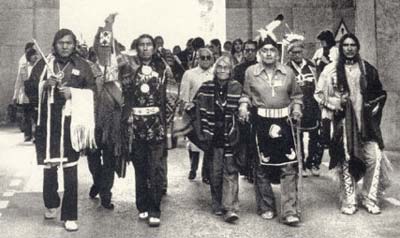
The IITC was founded in 1974 at a gathering by the American Indian Movement in Standing Rock, South Dakota attended by more than 5000 representatives of 98 Indigenous Nations.
The Declaration of Continuing Independence, Standing Rock South Dakota, June 1974 (PDF)
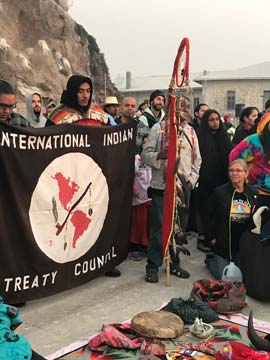
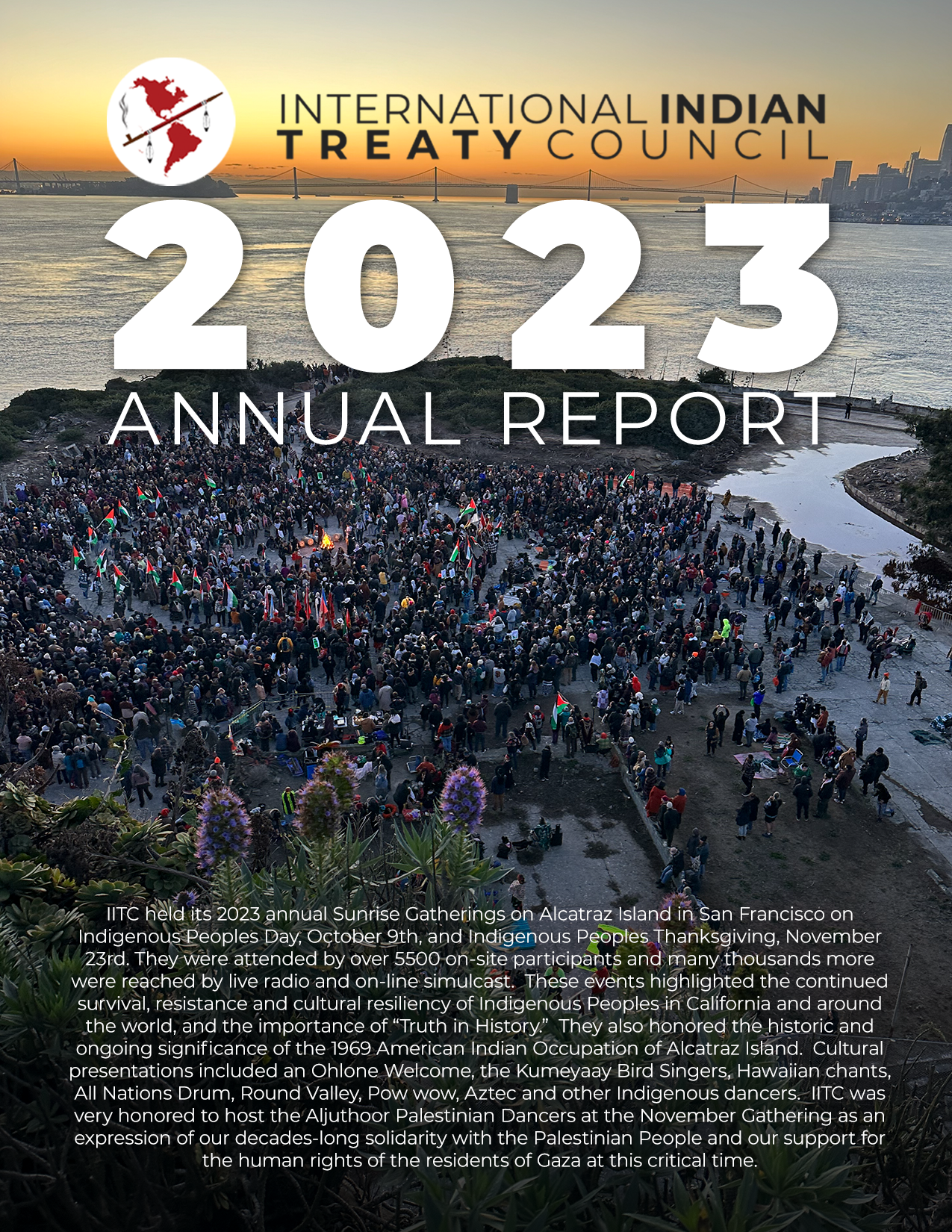
The symbol of the sacred pipe uniting the hemisphere was chosen for the IITC by the elders to represent the common bonds of spirituality, ties to the land and respect for traditional cultures common to all Indigenous Peoples.
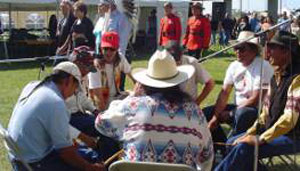
The IITC supports grassroots Indigenous struggles through information dissemination, networking, coalition building, technical assistance, organizing and facilitating the effective participation of traditional Peoples in local, regional, national and international forums, events and gatherings.
In 1977, the IITC became the first organization of Indigenous Peoples to be reorganized as a Non-Governmental Organization (NGO) with Consultative Status to the United Nations Economic and Social Council. The IITC focuses on building Indigenous Peoples’ participation in key U.N. fora such as the Commission on Human Rights, the Working Group on Indigenous Populations, the Sub-Commission on Prevention of Discrimination and Protection of Minorities, the Conference of the Parties to the Convention on Biological Diversity, UNESCO and the Commission on Sustainable Development. In recent years, IITC has also participated in the International Labor Organization (ILO), U.N. World Conferences, the International Union for the Conservation of Nature (IUCN) and the World Archeological Congress to systematically address concerns vital to Indigenous Peoples.
The IITC submits testimony, documentation and formal complaints to these fora as well as to the U.N. Center for Human Rights and the Organization of American States (OAS), to redress grievances, increase awareness and impact the development of international standards protecting the rights and survival of Indigenous Peoples.
The IITC also focuses on dissemination of information regarding the U.N. and opportunities for involvement to grassroots Indigenous communities, and works to educate and build awareness about Indigenous struggles among non-Indigenous Peoples and organizations